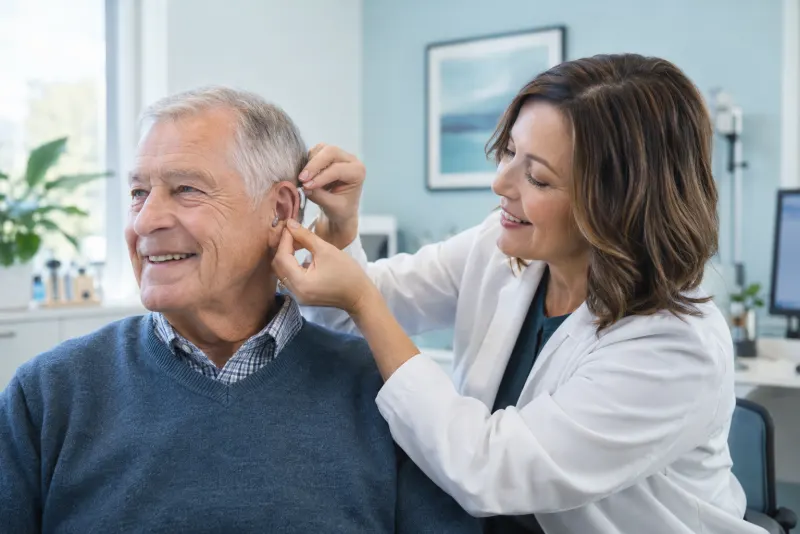


Hearing loss in adults
How hearing loss shows up, what causes it, when it's an emergency, and why treating it matters for long-term health.
5 guides · Clear answers, with sources

How do you know if you have hearing loss?
Hearing loss usually creeps up. Common early signs are asking people to repeat themselves, feeling that others mumble, struggling to follow conversation in noisy places and turning up the TV. Because age-related loss is gradual, family members often notice first. NIDCD says about one in three people aged 65 to 74 has hearing loss. Start with our checklist of early signs, then read about age-related hearing loss.
Sudden hearing loss is different: it's a medical emergency. If you lose hearing in one ear over hours or days, get seen today, and call 911 if it comes with face drooping, arm weakness or slurred speech. See what to do about sudden hearing loss.
Noise is the cause you can control: long or repeated exposure at or above 85 dBA can cause permanent loss (noise limits and protection). Hearing loss is also a leading modifiable risk factor for dementia, though no trial has shown that hearing aids prevent dementia. See what the dementia research shows.
5 guides in hearing loss
Early signs of hearing loss in adults: a checklist for you and family
Asking for repeats, turning up the TV and struggling in restaurants are classic early signs of hearing loss. A checklist, what family notices, and when to test.
6 min readReadSudden hearing loss is an emergency: what to do in the first 72 hours
Sudden hearing loss in one ear needs same-day care. What the AAO-HNS guideline says about hearing tests, steroid timing, and when to call 911.
7 min readReadHearing loss and dementia: what the research does and doesn't show
Hearing loss is a leading modifiable dementia risk factor in the Lancet Commission. What the ACHIEVE trial found about hearing aids, and what it didn't prove.
6 min readReadAge-related hearing loss (presbycusis): signs, causes and treatment
Age-related hearing loss affects about 1 in 3 people aged 65 to 74. How it progresses, what treats it, and why the average wait for hearing aids is 8.9 years.
6 min readReadNoise-induced hearing loss: limits, protection and testing
Sounds at 85 dBA and up can permanently damage hearing. NIOSH and OSHA exposure limits, hearing protection that works, and the hearing tests employers owe you.
6 min readReadReady to talk to someone?
Search audiologists, hearing clinics and hearing aid centers near you.